Mercedes‘ rivals hopes imploded in Monaco” src=”https://storage.ghost.io/c/dd/af/ddafbd99-2ccd-468c-b622-4b3cccf80b49/content/images/2026/06/XPB_1414815_HiRes.jpg” />
All three of Mercedes‘ main Formula 1 rivals watched their hopes of an upset implode at different speeds at the Monaco Grand Prix.
Max Verstappen’s bid to win barely survived the formation lap due to a Red Bull engine problem that ended his race when the lights went out.
Lewis Hamilton was easily beaten by championship leader Kimi Antonelli in the race after Ferrari‘s strong practice form could not be converted in qualifying, and his team-mate Charles Leclerc crashed out of the race late on.
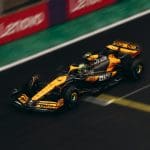
And McLaren, which has been building such a threat to Mercedes in the last few events, was long since out of the picture by that point. It suddenly fell to a distant fourth-best this weekend and was nowhere near the lead fight from the first practice session.
So it was left to Mercedes’ increasingly impressive championship leader Antonelli to make his mark yet again, as Mercedes’ other driver George Russell struggled to a muted sixth place in qualifying and then suffered a nightmare race to show just how vulnerable the team was here.
The Monaco layout neutered Mercedes’ main engine advantage, and made low-speed cornering performance and tyre preparation absolutely key.
Antonelli came through that with arguably the most special moment of an increasingly impressive title campaign, pinching pole from Verstappen at the very end of qualifying, then surviving every pressure moment in an increasingly chaotic grand prix to extend his championship lead to 66 points.
But why did every other bid to win fall apart?
Why Ferrari fell short
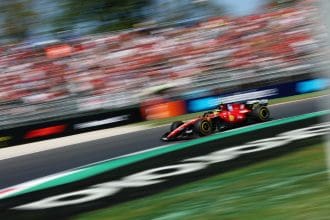
Ferrari arrived in Monaco as favourite and dominated Friday practice, which suggested it was going to make good on its potential.
The car’s good kerb compliance and strength in short, slow corners married nicely to Monaco hiding its ultimate power deficit on the engine side and favoured its smaller turbo, helping it zip off the corners.
But having already looked like it was struggling to move with the track evolution in final practice, come qualifying, neither Ferrari even managed to get onto the front row.
Both Hamilton and Leclerc were compromised in their own ways. Hamilton was thrown by the car being too on the nose at the start of qualifying, and he only got the balance back where he needed it by Q3 – which left him low on confidence.
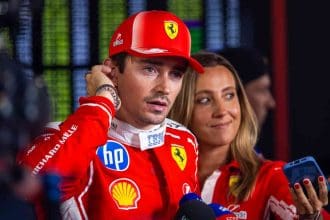
Leclerc’s issues ran deeper and have now followed him across multiple weekends. He has battled severe braking inconsistency throughout, which continued into the race and ultimately led to his shock shunt when the race restarted after a late safety car.
Leclerc feels the car is behaving differently corner to corner with no predictable pattern, which is compounded by the tyre feeling like it either produces grip or doesn’t – there’s no progressive middle ground to lean on.
Still, Leclerc was properly in the mix for pole right at the end of qualifying, as his final Q3 lap was a strong one until the rear stepped out at Tabac and he clipped the wall.
So there was definitely an element of simple execution at play here, too. This is still a track-position race, Ferrari could have had that crucial advantage, and it didn’t.
And it was then bluntly demolished by Antonelli in the race so emphatically that even having two cars running second and third meant they fell too far back for strategic games to be played.
Red Bull fragility
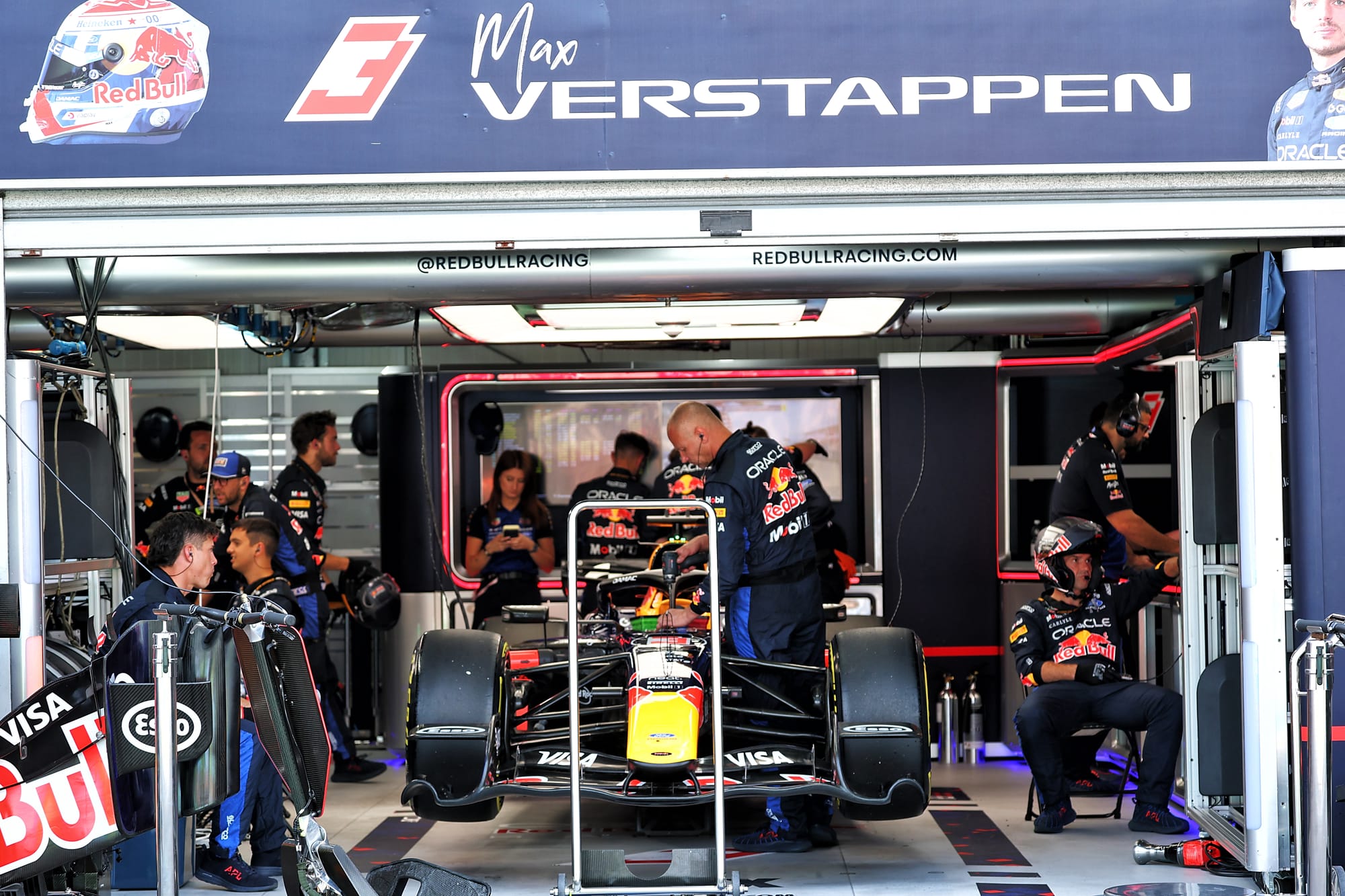
The only driver from the leading four teams who could have been satisfied despite being beaten by Antonelli in Monaco would surely have been Verstappen.
Red Bull’s 2026 car is now vastly improved. And while there were still hints of past Red Bull struggles in Monaco, where Verstappen was not as comfortable over the kerbs in the middle sector, this seems to have been clearly improved.
Qualifying second was a welcome return to prominence for Verstappen in Monaco. He could have been left lamenting the missing 0.043s that Antonelli pipped him by but this was not a result that was expected even mid-weekend.
He was feeling some real difficulties in the car at times in practice. The worst of his deficit in FP3 had him almost a second adrift, and Verstappen said that was real because he just couldn’t get the laptime out of the car.
So, second on the grid was a positive surprise. Unfortunately he never had the chance to try to capitalise on it thanks to a pretty catastrophic engine failure of some kind.
Verstappen was already concerned on the formation lap as he felt the engine was not responding properly then come the race start itself he dropped the clutch and it bogged down completely. After finally getting going, Verstappen could hear a worrying noise from the engine and he retired after slowly returning to the pits.
His bid to win lasted for a split-second after the lights went out, so we were never even close to seeing how hard he could have made life for Antonelli.
Why McLaren never got going
Lando Norris called it a “reality check”, and McLaren‘s Monaco weekend exposed its car’s main performance weakness along with proving it has a lingering reliability problem.
While the team had built strong momentum after a slightly tougher start to the season, winning the Miami sprint, and being Mercedes’ closest threat either side of that in Japan and Canada, Monaco offered no silver linings.
Norris and Oscar Piastri qualified seventh and eighth, over half a second off the pace. Norris said the car is “very difficult to drive, not very compliant and not very forgiving in any way” – which is a big problem in trying to attack Monaco’s bumpy braking zones and kerbs.
It left Norris feeling only 85% confident in the car, down from 100% last year when he won, while Piastri bluntly said the car was just lacking grip all weekend.
“The fact we can go from almost winning a race against the Mercedes to being so far off is pretty crazy,” said Norris. “It shows that the car works quite specifically in certain scenarios and clearly not in others.”
Team principal Andrea Stella identified two reasons for this. The first is just simply an aerodynamic load deficit the team is working to address. The second was more fundamental to the MCL40’s character being gentler on its tyres, which means it struggles to generate temperature and get the tyres into the right working window.
Even in that context though, McLaren underachieved. It felt getting at least one car on the third row should have been possible, so being seventh and eighth in qualifying was disappointing. And while Piastri benefitted from attrition to finish fourth, Norris retired with yet another problem.
McLaren has fallen quite far from its title-winning peak and will struggle to mount a championship revival on this form.
“We remain with the mindset that this could be another 2024 in terms of catching up at the end,” said Stella.
“But in 2024, our trajectory from reliability and performance was more convincing.
“So if we want to stay in the championship, we need to have a turnaround.”