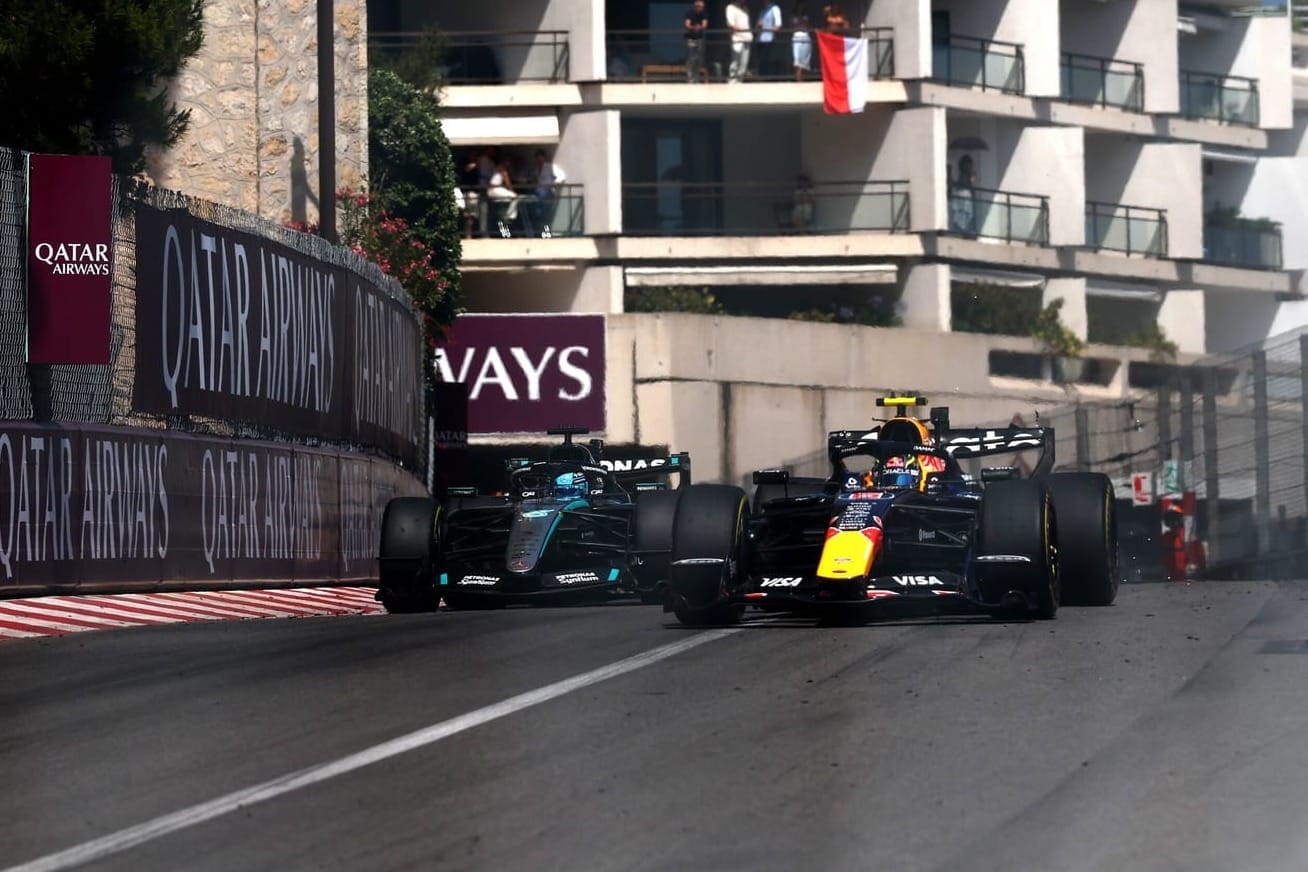
Red Bull ADUO verdict” src=”https://storage.ghost.io/c/dd/af/ddafbd99-2ccd-468c-b622-4b3cccf80b49/content/images/2026/06/SI202606070423-1.jpg” />
The biggest shock of Formula 1‘s Monaco Grand Prix weekend was not that Mercedes driver Kimi Antonelli defied Ferrari‘s favourite state to pull off a superb pole position and victory to extend his world championship lead.
In fact, it was not even on track.
Instead, it happened in various motorhomes on Sunday when the FIA sent a note to manufacturers informing them of the outcome of its analysis of the first Additional Development and Upgrade Opportunities (ADUO) period.
The catch-up mechanism, introduced as part of the 2026 rules package, had been a hot topic of conversation all weekend as manufacturers awaited the outcome of the FIA’s analysis to know for definite how much time and money they could devote to improving their engines.
Amid quite strange positioning all season, where car makers wanted to be deemed to be behind so they could be allowed to catch up, the FIA’s findings were viewed as a critical step in helping the chasing pack make up ground on Mercedes.
The further a manufacturer was judged to be behind, the greater allowances it would get for spending and test bench hours – and therefore the greater the chance to catch up.
The manufacturers’ answer came in a short, one-page note sent from the FIA’s Geneva office, and titled ‘Confirmation by FIA to Power Unit Manufacturers of ADUO status’.
Delivering a simple table, it informed each of them of their positioning in the rankings against the engine maker that was deemed to be the benchmark.
The note did not elaborate much on that and instead divided teams into three camps based on the basics of the system.
This is that a manufacturer deemed to be more than 2% behind gets one upgrade this season and one next, while any manufacturer that is more than 4% gets a maximum of two upgrades this year and two next.
So the list was quite a simple one in declaring which manufacturer was the benchmark and how many upgrades others were eligible for (up to a maximum of two).
The verdict was:
Red Bull: benchmark
Mercedes: one upgrade
Ferrari, Audi, Honda: two upgrades
There were no specifics (this is understood to be for IP reasons) of more complex sliding scales of extra spending and test bench hour allowances, which includes the $19million potentially on offer to Honda if it has been found to be more than 10% adrift.
But even the basic information was enough to send some shockwaves through the paddock because the implications of what has been decided are huge.
While there have been some whispers recently of a potential surprise in terms who would come out on top, when the final outcome dropped it still felt, as one paddock source suggested, bizarre.
That’s because in a year where Mercedes has been dominant and its power unit is regarded as the benchmark, a system originally intended to help those struggling to catch up has ended up opening the door for the best to get better.
A blow for Red Bull and Ferrari
One of the key hopes for Mercedes’ main rivals was that this verdict would allow them to catch up to the front.
With their belief being that Mercedes was the benchmark – based on results on track – one or two extra upgrades would be critical in narrowing a gap they believed there was to the front of the field.
Those hopes are now over, with Mercedes itself given the green light to improve its power unit.
The extra upgrade that it will be allowed this year, and the one it will get for 2027, means that there are a lot of extra learnings and improvements that Mercedes can bring to make its benchmark power unit even better.
Red Bull, while proud in some respects that its all-new internal combustion engine is the best in the field, faces the agony of knowing that its hands are now tied and it cannot make improvements and it has less spending and bench hours than others.
And worst of all is that, with the way the system works, Mercedes can now devote extra resources and bench testing to improving its engine and not bring upgrades on track until it wants – thereby keeping Red Bull as the benchmark.
That means Red Bull could remain hamstrung for a while yet.
Speaking recently at Red Bull’s factory, team principal Laurent Mekies had pushed back at the idea of his engine being the best – and was clearly counting on being able to make improvements.
“What we see is certainly Mercedes, a long way ahead of most of us,” he explained, as he suggested Red Bull was three tenths adrift.
Mekies did not want to talk about the verdict on Sunday night in Monaco. And although he suggested that the FIA’s ADUO note to teams was ‘provisional;, being a signed document means it is set in stone and will not be changed.
For Ferrari too, while it will be allowed two upgrades this season and two the next, the fact that Mercedes has some allowance for one upgrade each year will limit the progress it can make in relative terms.
It means Ferrari is no longer chasing a stationary target. So if Mercedes has plenty in its back pocket, Ferrari could find that it may not even get any closer even with the extra development opportunities it now has.
The ADUO outcome is one that, rather than helping Mercedes’ rivals catch up as they had hoped, could now ultimately end up hurting them in keeping the status quo or even resulting in them falling further away.
The catch-up mechanism implications
The way that the system had evolved into being viewed as a means by which rivals could close in had triggered some pushback from Mercedes team principal Toto Wolff a couple of weeks ago.
He was clear that he did not like ADUO being steered away from its original intention – a catch-up mechanism for struggling manufacturers – and instead had become a tool that rivals could use to narrow its advantage.
With Ferrari in particular open that this was its route to be able to chip away at Mercedes’ advantage, Wolff had said: “The principle of the ADUO was to allow teams that were on the back foot to catch up – but not to leapfrog.”
He added: “I would be very surprised actually to see, and disappointed, if ADUO decisions come up with any interferences into the competitive pecking order as it stands at the moment.”
But Wolff may now not be alone in thinking the upgrades system has delivered not what some had hoped for. And pushback against the system is likely to increase because of the way the outcome seems to fly in the face of what is happening on track.
It has long been understood that ADUO is based entirely on the power of the internal combustion engine element only, so does not take into account the harvesting and deployment elements, nor battery efficiency that are so critical to laptime.
But with it clear that a system intended to help struggling car makers catch up has now opened the door to potentially stretching things out, calls for a rethink of the regulations could now emerge.
Sources suggest that the ruling will almost certainly trigger demands to ditch ADUO completely, or change the way in which performance is measured to incorporate more aspects than simply internal combustion engine power.
The FIA’s single-seater director Nikolas Tombazis revealed a few weeks ago that the governing body had offered a more complex measuring procedure than simply power output of the engine – but that this had not been accepted by car makers.
Now, though, with everyone having seen the outcome of this basic verdict, opinions may have changed.
And revisions to the system are something that even the FIA itself is not against.
Tombazis remarked back in April: “I would be personally quite open to the idea of complicating the parameters a bit.”
The political fallout for F1’s 60/40 plans
The ADUO decision comes against the backdrop of a political dispute in the paddock over wider rule changes in F1.
The FIA is currently trying to reach agreement to get across the line a proposal to move F1 away from the current notional 50/50 split between combustion engine and electrical power.
An agreement in principle to make that closer to a 60/40 balance for next year has become hard to get across the line, as manufacturers baulk at rushing through changes to fuel flow that would require new hardware.
While Mercedes and Red Bull have been supportive, Audi has reservations about cost implications in making change for next year while Ferrari has been concerned about what impact this could have on ADUO.
Ferrari’s worry was that if everyone had been allowed to change engines for next year to accommodate an increase in fuel flow, then that would allow Mercedes to work more on its power unit. Better, in Ferrari’s perspective, to keep things the same and not allow Mercedes any freedom.
But that view was based on Mercedes being deemed under ADUO the benchmark engine – so therefore not allowed any homologation upgrades.
Now things have changed and the door is open for Mercedes to make changes with or without any hardware revisions towards 60/40 in the rules.
Right now it is understood there are two rule-change proposals on the table being evaluated, with the FIA preferring that what is agreed receives unanimous support rather than leaving one or two manufacturers marginalised.
The most aggressive route is the original lifting of the internal combustion engine power by 50kW (approximately 67bhp) for 2027. Due to the nature of the fuel-flow increase, this will require proper hardware revisions.
The compromise proposal – which Ferrari and Audi are understood to be happy to accept but some others don’t want because they think is not enough – is for a 20kW increase next year with the current hardware and then a step to the full 50kW in 2028.
Up until the arrival of the ADUO announcement, there did not seem to be a common ground opening up that all manufacturers were in favour of.
But after the shock announcement that Mercedes will now get upgrades anyway – irrespective of whether F1 shifts to 60/40 – it may spur Ferrari to feel that its best bet to the front is not with the current ADUO, but is instead with new power unit designs totally and a reset.
Expect a lot of political movement at this weekend’s Spanish GP.