Formula 1’s engine challenge will be turned on its head in Monaco, where for the first time the narrative is about how difficult it could be having too much energy.
So far this season the dominant topic with the 2026 engines has been the task of trying to charge the battery and optimise electric power deployment.
While this was eased slightly by regulation changes for round four in Miami last month, typically F1 tracks are ‘energy poor’ – meaning the battery cannot be topped up enough to use maximum electric power everywhere it can be.
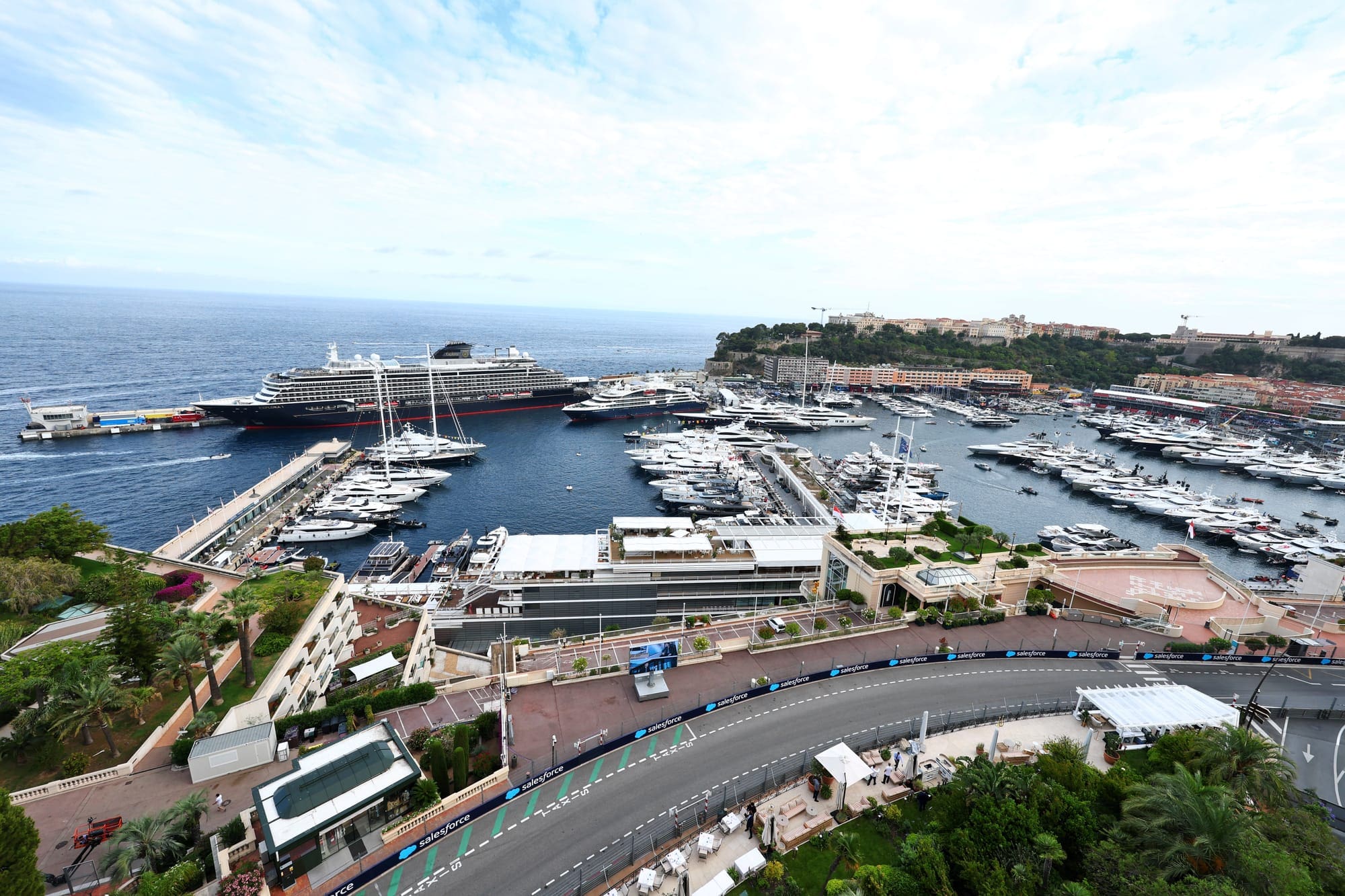
In Monaco, though, the mix of many slower corners and few straights flips the script and makes it ‘energy rich’, which has left several drivers excited by the prospect of driving these cars without having to worry about energy-saving tactics.
However, Paul Williams, chief trackside engineer at the Williams F1 team, said ahead of this weekend this represents “an energy management challenge unlike anything we have encountered so far this season”.
And others have leant into this, too.
“There’s a risk that we have too much energy and that can really complicate things as well,” said Racing Bulls driver Liam Lawson.
“Yes, normally we’re quite energy poor, but on a track like this, it’s not just as simple as having your battery charged all the time, [and] that’s a great story.
“It’s actually not, and it can cause a lot of other issues that we’ll be having to manage as well.”
As well as it being easier to charge the battery in Monaco, there is a new power cap at this event that will restrict how much MGU-K power can be deployed – the full 350kW will only be available up to 200km/h instead of just under 300km/h.
This is to keep speeds from getting dangerously high and it means spending energy on MGU-K power deployment will be lower than normal.
So, battery usage will be even lower. And where this may become an issue arises from another Monaco-specific challenge.
“The key challenge is maintaining turbo speed to avoid lag,” said Williams.
“Through the very low-speed hairpin, a drop in turbo speed is unavoidable, and drivers may experience torque under-delivery on exit. The team will work to mitigate this as much as possible across the weekend.”
When this turbo lag occurs, the diminished power from the internal combustion engine can be ‘filled in’ by the MGU-K harvesting energy and diverting this as electric power output.
However, this involves charging the battery, which cannot happen if the battery is already at 100% – which often gets referred to by F1 personnel as hitting the top of the (battery) pack.
As there is a limit on how much MGU-K power can be deployed and therefore deplete the battery, and the Monaco layout means there is not much opportunity to do this substantially anyway, the likelihood is that the drivers will be recharging the battery significantly in the first half of the lap just by driving normally with typical braking and throttle lift-off demands.
This means even beyond the challenge of the hairpin, by the time the cars get to Portier two corners later before the circuit’s longest straight through the tunnel, the battery could be at maximum capacity.
If that is the case they will not be able to use the MGU-K to assist with turbo lag, meaning diminished engine power and speed off the corner and that will be carried all the way down one of the few straights Monaco has.
“Energy isn’t an issue here, but definitely hitting the top of the pack coming out of Turn 8 before the tunnel is going to very much be a feature and a possibility,” said Mercedes driver George Russell.
“I know we’ve got some mitigations in place.”
What is unclear is how much of a feature this is likely to be across all the engines or if it is specific to the functionality of certain designs. If, for example, one engine is particularly efficient at recharging then it could presumably be more prone to hitting the top of the pack than another.
But, as with Ferrari, if that turbo does not struggle at low speed then it will be well placed to take advantage of the abundance of energy and use that purely as MGU-K power to maximise the overall engine potential on corner exit and then down the subsequent straight.
Though that implies an advantage for the smaller turbo, the situation is such an unknown that an argument could be spun that Monaco’s layout will help those with bigger turbo designs – like Audi.
Nico Hulkenberg said: “It’s so energy rich here that the MGU-K can compensate quite a bit for that, so it might be actually that this could work in our favour in the end.”